Exact body model
Use the actual wheelbase, roof height, and door arrangement.
Mini bus graphics help passengers recognize a transport service. Plan the logo and service information around the shorter body, windows and boarding door, with coverage that keeps required markings visible.
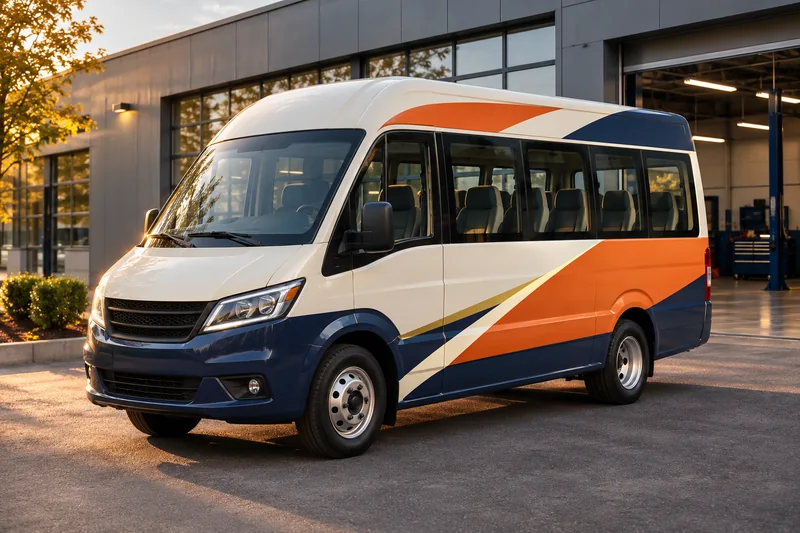
Mini buses include different cutaway bodies and passenger configurations. A base chassis model may not identify the exact body dimensions or window positions. Start with current photographs, the body manufacturer and measured panels.
The cab and passenger body can have different shapes, finishes and seams. A layout that looks continuous in a flat drawing needs checking on the actual vehicle.
For community transport, private tours or campus services, the operator name and a clear service identifier may be more useful than a crowded advertisement. Keep text away from wheel arches, handles and boarding doors.
Review each side independently. Entrance-side graphics should help people recognize the vehicle and boarding point; the opposite side can carry a broader brand message.
A partial wrap can make strong use of the rear and solid body panels without involving every window. Full coverage needs a surface-by-surface plan with exclusions clearly marked. Lettering may be enough where identification is the main goal.
Window graphics need separate approval and suitability review. Essential exit labels and operating features must remain visible and usable.
Compare material choices against the expected campaign duration and daily cleaning routine. Plan installation around passenger schedules and arrange suitable access for the complete vehicle.
Ask for artwork records and replacement-panel options. A mini bus can have panels repaired or replaced during its working life; a maintainable identity helps the fleet stay consistent.
Check the relevant manufacturer or provider for specifications and project details.
Check off each step as you prepare.
Your progress is kept only on this page.
Provide the actual cab and body configuration, including window and door arrangements. Include current photos rather than relying on the chassis model alone.
Choose the business identity and main message first. Decide which contact or passenger information needs to remain readable at a glance.
Review full and partial options on the actual vehicle. Check panel breaks, open doors, boarding areas and the proposed treatment of windows.
Confirm surface suitability, materials and installation availability with the provider. Keep the final artwork and agree on a process for replacement panels.
0 of 4 steps complete
Compact panels still need a complete design and access review.
Use the actual wheelbase, roof height, and door arrangement.
Keep boarding information and working access points clear.
Review any proposed glazing treatment separately.
Prioritize the operator or campaign message on smaller panels.
Check where graphics meet exposed paint and trim.
Agree on preparation, downtime, inspection, and care.
Fit the design around compact panels, passenger windows, doors, and everyday operation.
9 questions
It may, subject to surface condition and the body layout. Define the panels included and keep required markings, access points and vehicle functions clear.
The artwork must match the actual cab and body combination. Supply the body builder, model and current photos; the chassis model alone may not describe the exterior.
Use the clearest uninterrupted panels and review each viewing angle. A short message is easier to place around doors, windows and wheel arches than a long service list.
Yes. Selected side and rear panels can establish a recognizable identity while using the existing paint as part of the layout.
Only after the proposed product and placement have been reviewed for visibility, exits and operator requirements. Window coverage is optional, not a requirement for a coherent design.
Review the artwork with the doors open and closed. Keep boarding information, handles and important text legible without relying on alignment across moving parts.
A shared identity can, but placement may need adjustment for different body lengths and window arrangements. Approve a version for each configuration.
Provide vehicle and body details, photos, preferred coverage, current graphics, artwork status and installation location. Mention repaired paint or other surface concerns.
Ask the provider to retain the approved artwork and material records. Agree on how a repaired door or body section can receive matching graphics later.
No matching questions. Try another topic or clear the search.
Prepare your vehicle details, preferred coverage, and questions before requesting an estimate.