Vehicle permission
Confirm who approves changes to the vehicle.
Party bus wraps can promote an entertainment transport business or a specific event. Balance the artwork with a readable operator name and booking details for daytime and evening pickups.
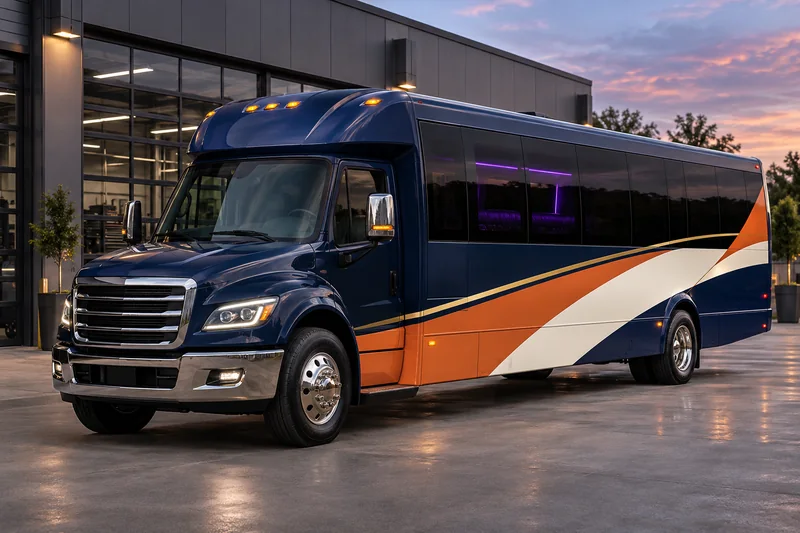
A party bus may serve birthdays, weddings, private events and group outings. Decide whether the wrap should promote the transport business throughout the year or carry a temporary campaign. That decision affects artwork, material and eventual removal.
A versatile brand layout can work across changing destinations. Event-specific information may be better suited to a replaceable approved panel than embedded throughout a long-term design.
Strong color and large imagery can fit an entertainment brief, but the operator name and useful booking information still need room. Preview the design at road-viewing distance and under realistic lighting conditions.
Avoid assuming a glossy or reflective appearance guarantees nighttime readability. If specialty films are proposed, confirm their approved application and assess reflections and required vehicle markings.
Keep the boarding door, steps, handles and access points identifiable. Consider the bus while passengers are arriving and doors are open. Important text should not disappear across moving components.
Tinted windows and lighting features can make the body visually complex. Any window graphics require a product and placement suitable for visibility, exits and operator requirements.
Supply photographs of the actual party bus, including modifications and equipment. A generic coach template may miss body changes. Review surface condition before production and agree on the exact coverage.
Allow for preparation, installation and care around bookings. Ask how damaged panels can be replaced, how cleaning products affect the finish and what removal will require when the identity changes.
Check the relevant manufacturer or provider for specifications and project details.
Check off each step as you prepare.
Your progress is kept only on this page.
Decide whether the graphics promote the transport business or a particular campaign. Identify any event details that will need to change later.
Photograph body modifications, doors, windows and lighting equipment. Give the designer accurate details before approving a template.
Check the main message and booking details in daylight and at typical pickup points. Review boarding access and any proposed specialty or window films.
Agree on preparation, installation and handover requirements before reserving dates. Request care instructions and a process for replacing damaged or outdated graphics.
0 of 4 steps complete
Event branding needs to work beyond a single promotional image.
Confirm who approves changes to the vehicle.
Assess contrast and message readability in ordinary operating conditions.
Decide which information is permanent and which may change.
Keep passenger access and required information clear.
Review glazing, trim, curves, and existing graphics.
Keep the artwork records, care instructions, and removal terms.
Balance event branding with readable graphics, vehicle access, and an adaptable design.
9 questions
Base the decision on how the bus is used. A lasting operator identity suits changing bookings; an event campaign needs a plan for updating or removing time-sensitive information.
Give the business name and primary message clear space. Large imagery can support the theme without competing with every piece of booking information.
Not fully. Review the design under realistic pickup lighting and assess any proposed specialty films. A glossy appearance alone does not establish nighttime readability.
Tint does not determine whether graphics are suitable. The product, visibility, exit operation and operator requirements all need review before window coverage is approved.
Yes. Added equipment, lighting, doors or altered bodywork may be missing from a generic template. Provide photographs of the current vehicle before artwork is prepared.
Choose a visible area with enough room for a short, readable contact method. Check that doors, panel gaps and decorative artwork do not interrupt it.
Discuss replaceable graphics for the relevant area during design. The provider needs to confirm the material, placement and replacement process for that approach.
Reserve time for surface preparation, application and the product’s handover requirements. Confirm vehicle availability before committing to installation dates.
Request instructions for the actual film and finish, including suitable cleaning products and how to report damaged edges or panels. Share them with anyone responsible for washing the bus.
No matching questions. Try another topic or clear the search.
Prepare your vehicle details, preferred coverage, and questions before requesting an estimate.